
Looking For a Way to Preserve Your Family's Story? Here Are 10 Things You Should Know

Some stories are carried quietly.
They live in the voice of a parent, the sayings of a grandparent, the way someone describes their first home or remembers the sound of rain on a farmhouse roof. They are often present at family gatherings, though nobody thinks to write them down. Then, gradually, the details become harder to recall. A name disappears. A date becomes uncertain. A familiar voice falls silent.
Preserving a family story is not about creating a perfect record of every event. It is about making space for a person to be heard while they are still here to tell it.
At Tell My Story, we use the same care, patience and interview-led craft that sits behind our documentary video production and editorial work. The difference is that the story is not made for an audience, a campaign or a public platform.
It is made for the family.
Here are ten things worth knowing before you begin.
1. Start with the person, not the date
It is tempting to begin with a timeline.
Where were you born? When did you get married? What jobs did you have? These questions have their place, but a life is more than a sequence of dates.
Start with the person in front of you. Ask what they remember, what mattered to them and what they would like their family to understand. Let their interests guide the conversation. One person may want to talk about childhood. Another may return to work, migration, music, sport, faith, friendship or the small house where they raised their children.
We don’t just collect milestones; we discover the character between them.
The best family stories are not always the most orderly. They move as memory moves, following an association, a face, a place or an old feeling.
2. Record the voice, not only the facts
A written family history can preserve information. A recording can preserve presence.
There is something irreplaceable about hearing the way someone speaks. The pause before a difficult memory. The laugh that arrives halfway through a sentence. The particular pronunciation of a family name. The phrase they have used for fifty years.
These details may not appear in a written account, but they are part of the person.
When you record a family story, make sure the sound is treated with care. Clear audio matters. A beautiful image cannot restore a sentence that is difficult to hear, and no transcript can quite replace the original voice.
We don’t just document what someone said; we preserve how it felt to listen.
3. Ask about ordinary days
The major events are often the easiest to remember.
There was a wedding, a war, a business, a move, a birth or a difficult year. These chapters matter, but future generations may be just as interested in the ordinary texture of life.
What did breakfast look like when you were young? Who did the shopping? What did your first kitchen smell like? How did people spend a Sunday afternoon? What games did the children play? What did you wear to school? Which neighbour always came around for a cup of tea?
These details may feel unremarkable now. Later, they become a doorway into another world.
Ask about recipes, routines, family jokes, household rules, favourite songs and the objects that were always in the room. Ask what happened after the big event. Ask what a normal Tuesday looked like.
We don’t just preserve the headline chapters; we keep the atmosphere around them.
4. A familiar room can be better than a formal studio
People often feel more comfortable speaking in a place that already belongs to them.
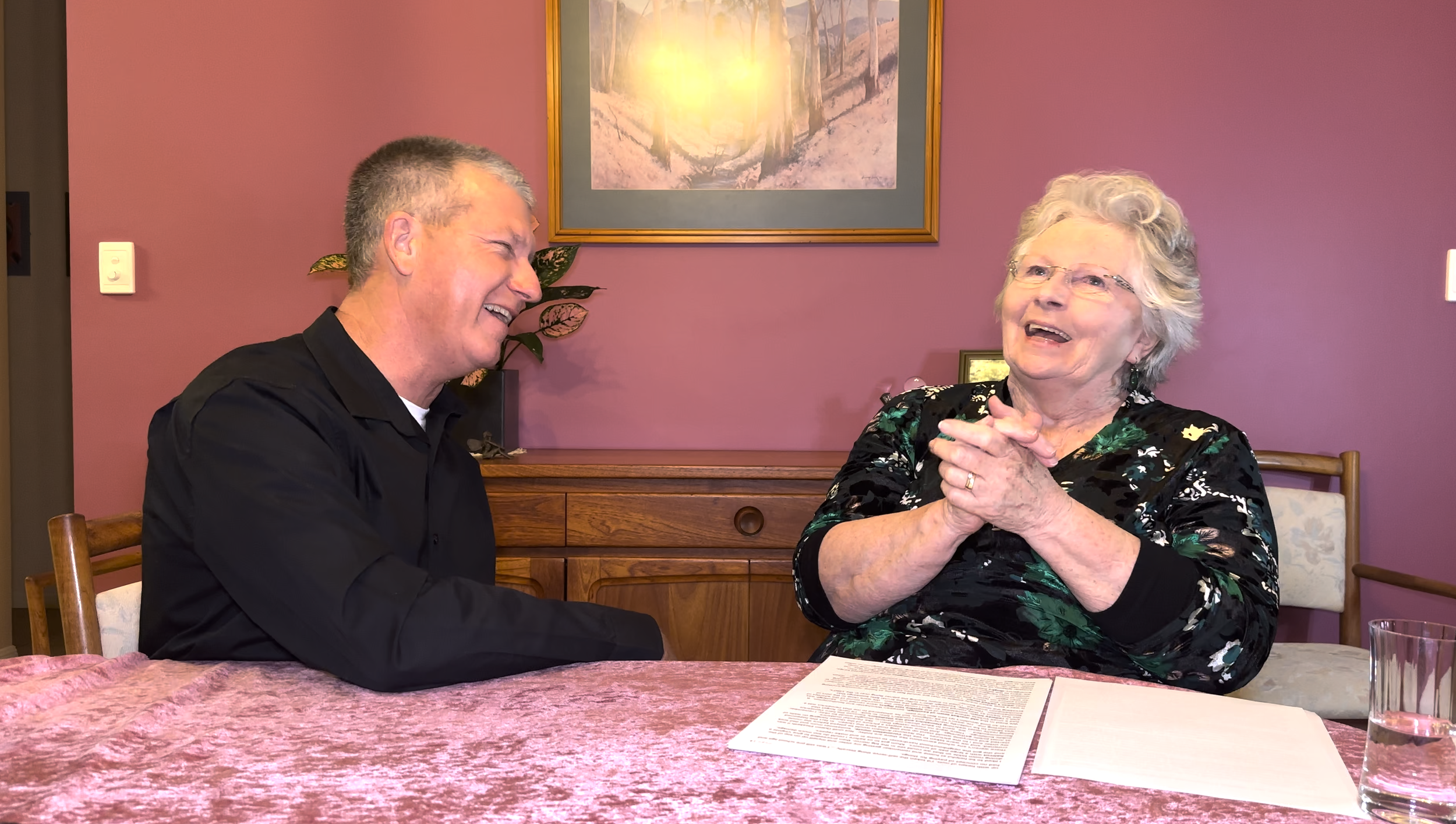
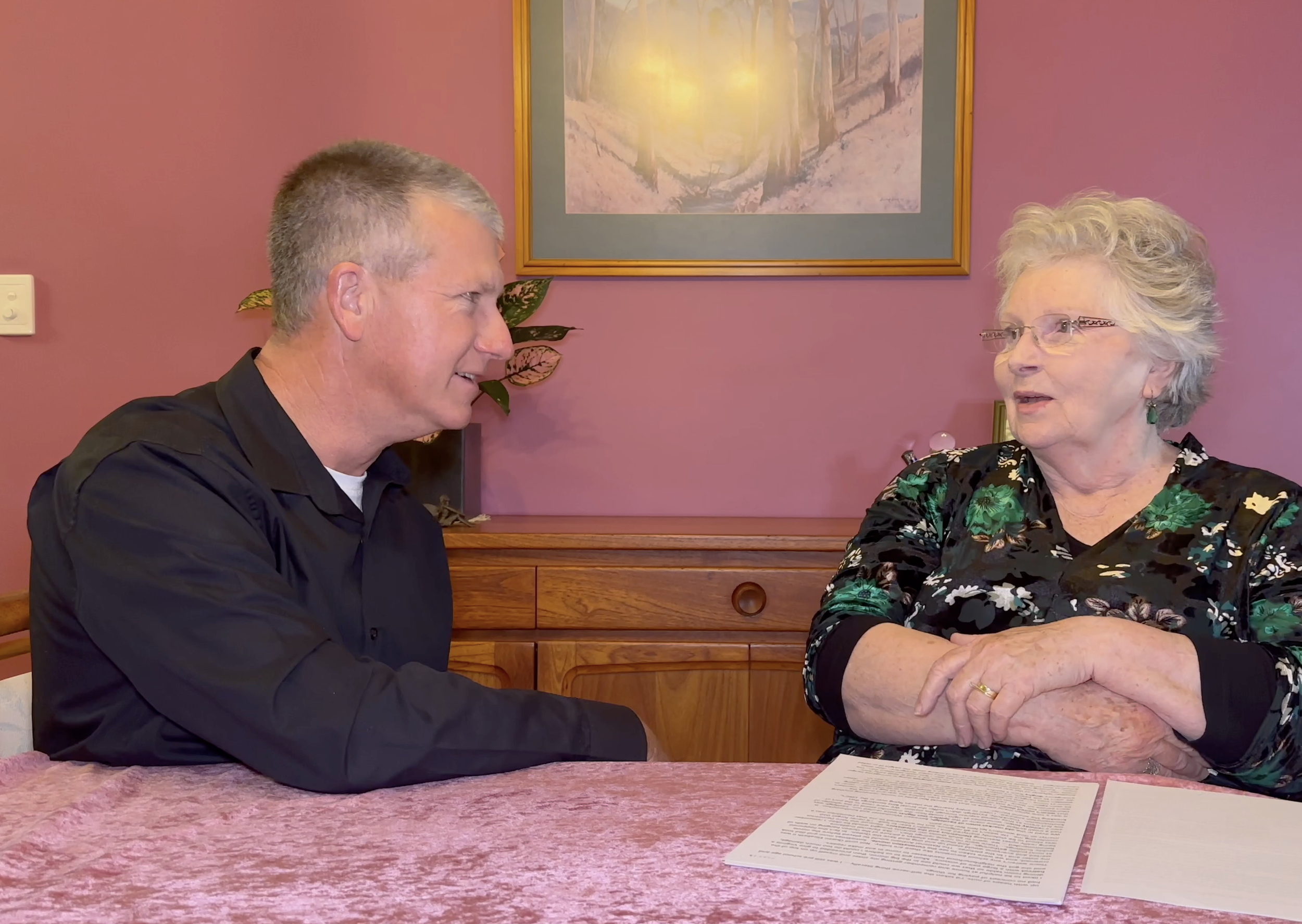
That might be the kitchen table, a favourite armchair, a verandah, a workshop or the room where the family has gathered for years. A familiar setting can help someone settle into the conversation without feeling as though they are performing.
A formal studio can be useful for some projects, but a family story usually benefits from warmth and recognition. The room itself may contain photographs, furniture, books, tools and other quiet prompts for memory.
The practical consideration is sound. Choose a space away from traffic, television, loud appliances and hard surfaces that create echoes. Give the storyteller a comfortable chair, allow plenty of time and remove anything that makes the process feel hurried.
We don’t just choose a location; we create the conditions for someone to feel at home.
5. Be ready for unexpected emotion
Memory does not always arrive neatly.
A light-hearted story can lead to an old sadness. A question about childhood may bring back someone who has been gone for decades. A person may become quiet, laugh unexpectedly or need a moment before continuing.
That is not a problem with the recording. It is part of the truth of a life.
The interviewer’s role is not to force every subject to a conclusion. It is to listen carefully, leave room for silence and allow the storyteller to decide how far they wish to go. Before recording, talk openly about privacy and consent. Make sure the person understands that they can pause, change direction or stop at any time.
We don’t just ask questions; we hold the conversation with care.
6. Invite grandchildren into the questions
Children and grandchildren often ask the questions adults overlook.
They may want to know what their grandparent was like at their age, whether they ever got into trouble, what their first car was or how they met their closest friend. These questions can open a different kind of conversation: curious, direct and full of life.
Invite younger family members to suggest questions or bring photographs and objects to the interview. They do not need to sit through every part of a long recording, but their involvement can make the finished story feel like a conversation across generations rather than a formal biography.
Encourage them to listen without correcting small details. Memory is personal, and two people may remember the same afternoon differently.
We don’t just record for the next generation; we help the next generation take part.
7. You do not need to wait for a milestone
Many families wait for a significant birthday, anniversary or retirement before recording a story.
Those occasions can provide a meaningful reason to begin, but they are not the only reason. Waiting for the perfect moment can mean waiting longer than intended.
A family story can begin because someone has an hour to spare. It can begin because a grandchild has become curious. It can begin because an old photograph has been found in a drawer and nobody is quite sure who is standing in it.
You do not need to know the entire shape of the finished story before you start. One conversation can lead to another. A single memory can open a whole chapter.
We don’t just mark milestones; we preserve the living person who is here today.
8. The details that feel unimportant now may matter most later
A future family member may not be interested in a carefully polished summary of someone’s life. They may want to know how their grandmother said their name, what their father believed about hard work or what their great-grandfather did when the crops failed.
They may want to see the kitchen where family meals were prepared. They may want to hear an old story told in the voice they have only ever known through photographs.
The things that feel too small to mention are often the things that make a person recognisable. Their expressions, habits, humour, opinions and imperfections are part of the inheritance.
We don’t just preserve the version of someone that looks good on paper; we preserve the person as they were known.
9. Audio matters as much as the image
Video gives a family the face, gestures and surroundings. Audio gives it intimacy.
A voice recording can be listened to while travelling, cooking or sitting quietly at home. It can be revisited when the screen is not available. It can preserve a laugh, a family saying or a story that needs no visual explanation.
For a professionally produced family film, we consider the whole experience: interview sound, room tone, photographs, music, pacing and the gentle visual details that help a memory breathe. This is where our wider work as a brand storytelling agency informs the process, without turning a private family story into an advertisement.
The technology should remain in the background. The voice should come forward.
10. The story belongs to the family
Not every meaningful story needs to be published.
Some memories are meant for children, grandchildren, siblings and the people who understand the names, places and references woven through them. A private family story can be shared through a secure link, kept on personal devices or delivered as a finished film for the family to hold onto.
Privacy should be discussed from the beginning. Decide who may view the recording, whether family photographs can be included and how the finished story should be stored. The technical work matters because a precious recording deserves to remain accessible in the years ahead.
At Tell My Story, finished stories are delivered as private family treasures rather than public media. They are made to be watched at home, shared across distance and returned to when someone wants to hear that voice again.
We don’t just produce a video; we create a lasting place for memory to live.
A story worth keeping
Every family has stories that have never been fully told.
Perhaps there is a parent who remembers a world the grandchildren have never seen. Perhaps a grandparent carries the details of a journey, a home, a friendship or a difficult chapter that exists nowhere else. Perhaps your own memories are beginning to feel important in a way they did not before.
You do not need a perfect script. You only need a willingness to sit together, slow down and listen.
Our Tell My Story recording service brings together thoughtful interviewing, cinematic production and careful editing to preserve a person’s memories in their own voice. We can record in a familiar home, a meaningful location or another setting that feels right for the story.
If you would like to talk about recording a parent’s, grandparent’s or family member’s story, get in touch with us. We will listen first, answer your questions and help you consider what should be preserved.
Because one day, the details that seem ordinary may become the most precious things your family owns.